





A few days ago, I was doing our usual grocery run when I found myself standing in front of the milk aisle for much longer than I expected.
Fresh milk, full cream milk, low-fat milk, lactose-free milk, UHT milk, powdered milk… there were just so many choices! As a 40+ mom with two adult kids and a husband, I realized that even after years of grocery shopping, I still sometimes wonder, “Which one should I buy?”
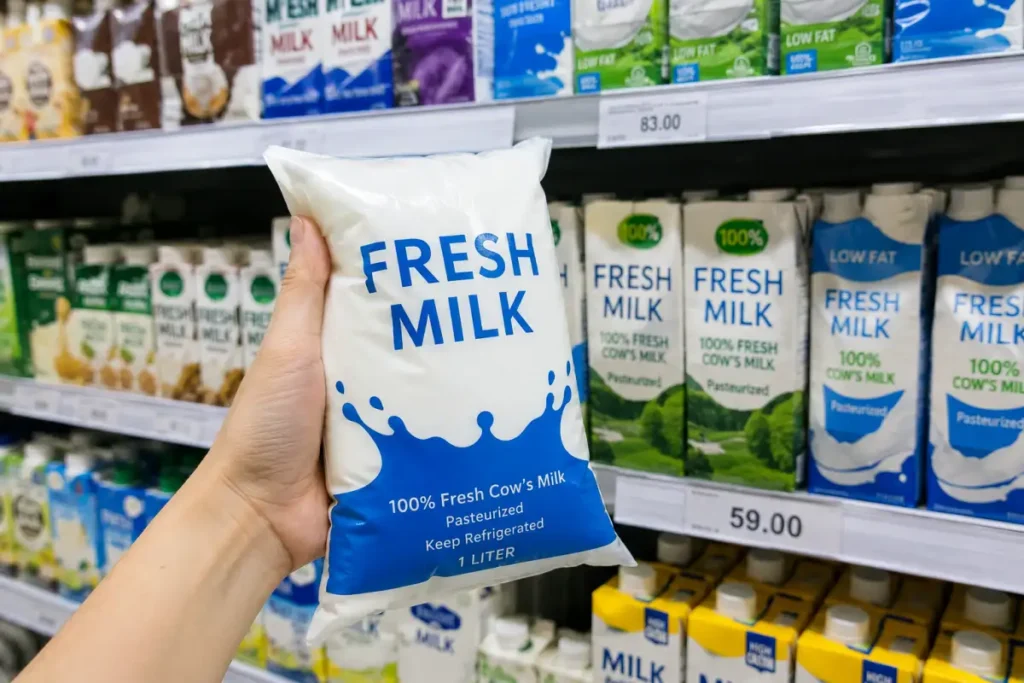
So when I got home, I did a little reading and thought I’d put together this quick guide. If you’ve ever been overwhelmed by the milk section at the grocery, this one’s for you!
1. Fresh Milk
Fresh milk is minimally processed and usually has the shortest shelf life, so it needs to be refrigerated. It has a fresh, creamy taste and is a good source of protein, calcium, and vitamins.
Best for: Families who consume milk regularly and prefer a fresh taste.
2. UHT (Long-Life) Milk
UHT (Ultra High Temperature) milk is heated at a very high temperature to make it last much longer. It doesn’t need refrigeration until it’s opened, making it perfect for stocking up at home.
Best for: Busy families and emergency pantry supplies.
3. Whole or Full Cream Milk
Whole milk contains around 3.5% milk fat, making it richer and creamier than other types. It also provides healthy fats along with protein and calcium.
Best for: Growing children, active individuals, and anyone who enjoys a creamier taste.
4. Reduced-Fat (2%) Milk
Reduced-fat milk contains less fat than whole milk but still has almost the same amount of protein and calcium.
Best for: Families who want a balance between taste and lower fat intake.
5. Low-Fat (1%) Milk
Low-fat milk has even less fat while still providing important nutrients like calcium and protein.
Best for: Adults who want to reduce fat intake without giving up dairy.
6. Skim or Non-Fat Milk
Skim milk contains almost no fat but keeps most of the protein and calcium found in regular milk.
Best for: People watching their calorie or fat intake.
7. Lactose-Free Milk
If drinking regular milk causes bloating or stomach discomfort, lactose-free milk may be a better option. The lactose has already been broken down, making it easier to digest.
Best for: People with lactose intolerance.
8. Powdered Milk
Powdered milk is simply dehydrated milk that becomes regular milk once mixed with water. It’s affordable, convenient, and has a long shelf life.
Best for: Budget-conscious families and long-term storage.
9. Evaporated Milk
Evaporated milk has about 60% of its water removed, making it thicker than regular milk. It’s commonly used in cooking, baking, coffee, and creamy dishes.
Best for: Recipes rather than everyday drinking.
10. Sweetened Condensed Milk
Unlike evaporated milk, condensed milk contains added sugar. It’s thick, sweet, and usually used for desserts.
Best for: Baking and sweet treats—not as a substitute for regular drinking milk.
11. Plant-Based Milk
You’ll also find dairy-free options such as soy milk, almond milk, oat milk, and coconut milk beverages.
- Soy milk – High in plant protein.
- Almond milk – Lower in calories.
- Oat milk – Creamy and naturally sweet.
- Coconut milk beverage – Great for those avoiding dairy.
Best for: People who are lactose intolerant, vegan, or simply want to try dairy alternatives.
So… Which Milk Should You Choose?
There isn’t one “best” milk for everyone. The right choice depends on your family’s needs, lifestyle, and health goals.
- For kids: Whole or full cream milk provides healthy fats for growth.
- For adults: Reduced-fat or low-fat milk is a popular everyday choice.
- For seniors: Low-fat or lactose-free milk may be easier to digest while still providing calcium.
- For weight management: Skim milk or unsweetened plant-based milk can be good options.
The next time you’re standing in front of the milk section wondering which carton to grab, don’t stress too much. Every family is different, and what works for mine may not be the best fit for yours.
As for me, I’ll probably still spend a few extra minutes reading labels during our grocery trips—but at least now I’ll know exactly what I’m looking for!
References
- National Nutrition Council. (2024). Philippine Nutrient Reference Values and healthy eating resources. https://www.nnc.gov.ph/
- Harvard T.H. Chan School of Public Health. (2024). Milk: Nutrition and Health. https://www.hsph.harvard.edu/nutritionsource/milk/
- Cleveland Clinic. (2024). Milk Nutrition: Benefits and Which Type Is Best. https://health.clevelandclinic.org/