





Key Takeaways
- Start with the comfort issue you want to solve, such as glare, heat, privacy, or insects.
- Window direction and the time of day can affect which treatment works well in a room.
- Layered window treatments can provide separate control over daylight and nighttime privacy.
- Outdoor screens should be selected with sun exposure, airflow, wind, and drainage in mind.
- Measurements, safe operation, and maintenance are as important as appearance.
Windows and patios shape how a home feels throughout the day. Bright light can make a room pleasant, but it can also create screen glare, fade exposed furnishings, and make a seating area uncomfortable. Privacy, airflow, and seasonal heat all deserve consideration before choosing a curtain, shade, blind, screen, or other treatment.
For hard-to-reach windows, large openings, or spaces that benefit from scheduled adjustments, motorized shades and screens are one possible control option. The right operating method depends on how often the treatment will be used, who will use it, and whether the opening can be reached comfortably and safely.
Start With the Room’s Main Problem
A treatment should address a real need rather than only match a color scheme. Walk through each room at different times of day and note any conditions that interfere with everyday use. A bedroom may need stronger light reduction, while a living room may need softened daylight without losing its open feel.
- Morning or afternoon glare on screens and reflective surfaces
- Heat near large or sun-facing windows
- Limited privacy from neighboring homes, sidewalks, or streets
- Strong sun exposure on flooring, artwork, or furniture
- Insects, wind, or intense sun on a porch or patio
- Windows that are too high, wide, or obstructed for easy operation
When comparing finishes, fabrics, or operating styles, it can help to review related home remodeling products as part of a broader plan for how rooms and outdoor areas will be used. Coordinating choices around function first can prevent a treatment from becoming difficult to operate or maintain.
Match the Treatment to Window Direction
Sunlight is not distributed evenly around a home. East-facing windows commonly receive direct light earlier in the day, while west-facing windows can bring strong late-afternoon sun. South-facing windows may receive extended daylight, and north-facing windows often call for a lighter approach centered on daylight and privacy. The U.S. Department of Energy notes that east- and west-facing glass can be particularly challenging for glare and solar heat control.
What to Consider by Orientation
- East-facing windows: Consider treatments that reduce early glare while still allowing useful daylight later.
- South-facing windows: Look for adjustable light control that can respond to changing seasonal sun angles.
- West-facing windows: Give extra attention to late-day heat and glare, especially in rooms used during the afternoon.
- North-facing windows: Focus on privacy and gentle light diffusion when heat blocking is less urgent.
Compare Levels of Light Control
Light control is a spectrum, not a single feature. Sheer materials can soften daylight and preserve a bright feeling. Light-filtering materials reduce glare while allowing some light through. Room-darkening and blackout materials provide stronger light reduction, though light can still enter around edges unless the treatment is designed and installed to limit those gaps. Solar screens can reduce glare and solar exposure while retaining some outward visibility.
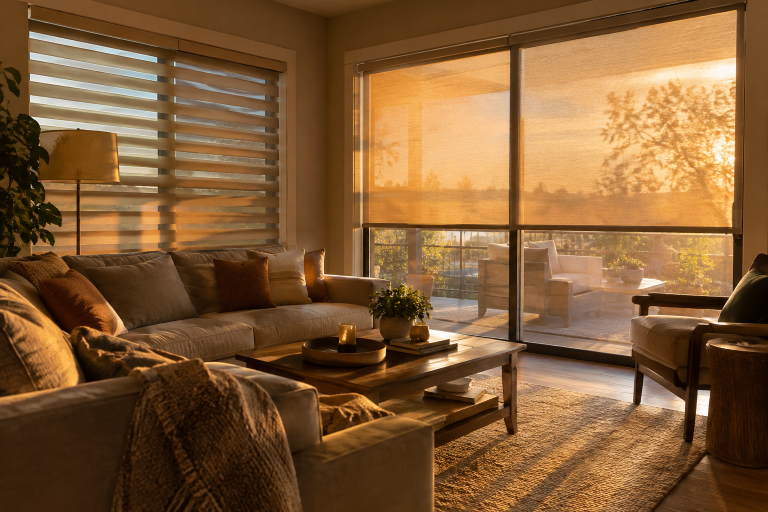
For flexible results, consider layers. A lighter layer can be used during the day to diffuse sunlight, while a denser layer can be closed for nighttime privacy, sleep, or media viewing. Keep in mind that many transparent or semi-transparent materials offer daytime privacy but become easier to see through after dark when interior lights are on.
Choose Materials for the Environment
Materials should be suited to the conditions they will face. Rooms with direct sun may need materials that tolerate regular exposure. Bathrooms, kitchens, and semi-enclosed outdoor spaces may require options that are easier to clean and better suited to moisture, dust, pollen, or frequent use. In homes with children or pets, consider durability and controls that keep cords out of reach and prevent them from hanging near play areas.
Lighter materials can support airflow and a softer visual effect, while denser materials may provide stronger privacy or light control. The tradeoff is that a heavier treatment can also reduce the amount of daylight entering the room. Before deciding, consider cleaning needs, the amount of direct sun, and whether the treatment will be indoors, outdoors, or exposed to changing weather.
Plan Patio Screens Around Weather and Airflow
Outdoor screens can make a patio or porch more usable by reducing insect and glare issues and direct sun while still allowing some air movement. However, screen performance varies by mesh, openness, mounting method, and local conditions. A shaded patio with good cross-breezes may need a different approach than a west-facing porch that receives intense afternoon sun.
- Check wind exposure and whether the mounting surface is appropriate for the system.
- Consider drainage paths so screens and surrounding structures do not interfere with water flow.
- Choose materials based on whether insect control, glare reduction, privacy, or wind moderation is the primary goal.
- Inspect exterior tracks, fasteners, seams, and mounting points after severe weather.
Understand Energy Performance Without Overpromising
Window treatments can improve comfort, but they do not replace efficient windows, insulation, ventilation, or properly functioning heating and cooling equipment. The Department of Energy states that heat gain and heat loss through windows account for roughly 25% to 30% of residential heating and cooling energy use. Its guidance on U-factor and solar heat gain coefficient explains why climate, window orientation, and the window itself all matter when managing heat transfer.
In simple terms, U-factor relates to heat flow through a window, while solar heat gain coefficient indicates how much solar heat passes through it. Interior shades, blinds, exterior overhangs, and sunscreens may help reduce unwanted solar heat gain, but their results depend on fit, material, operation, and the specific opening.
Keep Ventilation, Safety, and Maintenance in the Plan
Light and privacy control should not block needed ventilation paths. Open windows only when outdoor conditions, humidity, air quality, and home security make doing so appropriate. Kitchen and bathroom exhaust fans remain important when cooking, bathing, or other activities add moisture and pollutants indoors. The EPA explains that inadequate ventilation can increase indoor pollutant levels, while moisture control also helps protect indoor conditions.
For ongoing upkeep, follow the manufacturer’s cleaning instructions, avoid harsh products unless they are approved for the material, and check batteries or charging access for powered controls. Measure each opening at multiple points before ordering, including width, height, depth, trim, handles, and nearby furniture. Accurate measurements help reduce rubbing, uneven operation, and unwanted light gaps.
Final Decision Checklist
- Identify the room’s main comfort concern.
- Observe sunlight at several times of day.
- Set separate goals for daytime light and nighttime privacy.
- Choose materials based on sun, moisture, wind, insects, and cleaning needs.
- Decide whether manual or powered operation is more practical.
- Measure carefully and plan for maintenance before installation.
The best patio or window treatment fits daily life. By balancing light, privacy, airflow, weather exposure, and ease of use, homeowners can make indoor and outdoor spaces more comfortable without relying on a one-size-fits-all solution.