


Table of Contents
- Introduciton
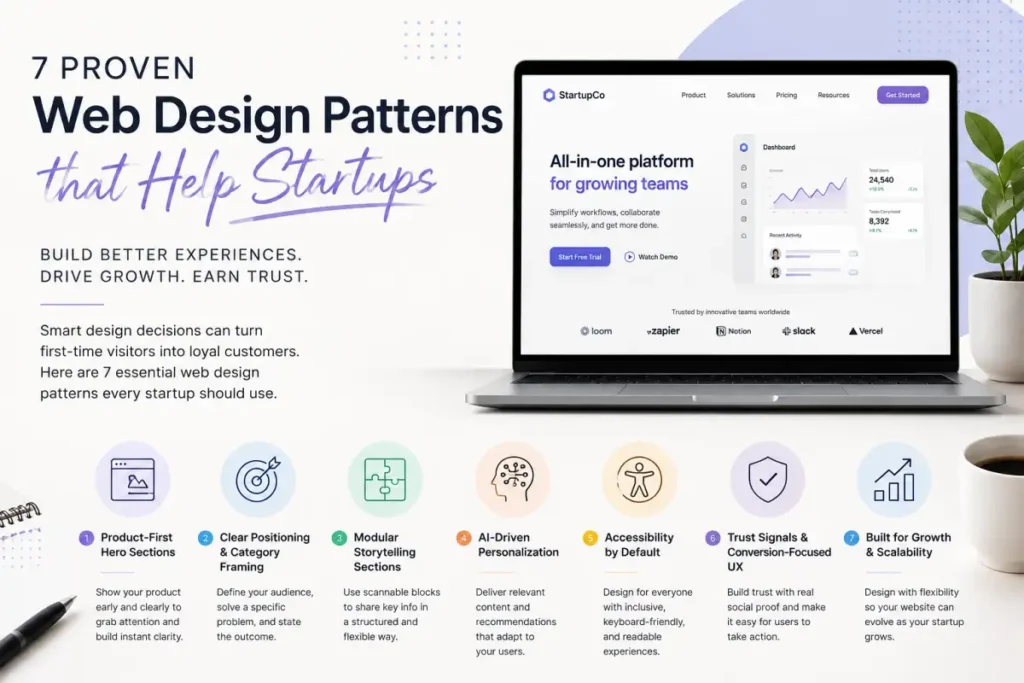
- Product-First Hero Sections
- Clear Positioning and Category Framing
- Modular Storytelling Sections
- AI-Driven Personalization
- Accessibility by Default
- Trust Signals and Conversion-Focused UX
- Conclusion
Creating an effective website is crucial for startups seeking to build a strong online footprint. The right design patterns can make the difference between a forgettable browsing experience and true customer engagement. Industry leaders consistently recommend proven strategies for web design for startups, highlighting their powerful impact on user experience and conversion rates. By integrating these patterns, startups lay the groundwork for scalable growth.
In an era where every impression counts, a well-designed website is the cornerstone of brand credibility and user retention. Startups must prioritize web design patterns that have demonstrated success across diverse industries. Investing in smart layouts, clear communication, and inclusive design principles helps capture attention and drive loyal users from the outset.
Developing an online presence that balances innovation with usability gives startups the agility to pivot and scale. Effective design decisions not only position a startup competitively but also create memorable user journeys. Carefully curated design frameworks support business goals while nurturing trust and enthusiasm among site visitors.
This article examines essential web design patterns proven to accelerate startups’ digital growth. Founders, developers, and marketers will benefit from understanding how each strategy shapes successful online experiences.
Product-First Hero Sections
Leading with the product in the hero section streamlines user understanding from the moment they land on the site. By featuring product interfaces, demo videos, or application dashboards above the fold, startups provide immediate answers to what the solution is and how it operates. This transparency allows users to determine relevance in seconds, driving more qualified engagement. Highlighting the core offering visually also reduces cognitive load, making the user’s first step easy and inviting.
Successful startups like Slack and Dropbox built initial traction by using hero sections that demonstrated their products’ real value. Real product visuals foster authenticity, eliminate ambiguity, and inspire confidence in potential customers.
Clear Positioning and Category Framing
Startups excel when they use plain language to define their audience, clarify the problem, and state outcomes all within the homepage’s first blocks. Precise category framing fast-tracks brand differentiation in crowded markets. Instead of making broad promises, compelling homepages adopt specific value statements. For example, “Designed for HR teams to streamline onboarding and eliminate paperwork errors” resonates much more clearly than non-specific claims.
Leading design voice Nielsen Norman Group suggests that strong category framing guides users through mental filtering. This enables startups to capture the attention of the right audience before they drift away.
Modular Storytelling Sections
Scannability is critical for users who interact with websites on a variety of devices. Organizing content into modular blocks lets visitors digest information at their own pace. Each section should focus on a specific topic, such as a detailed use case, a customer success story, or a breakdown of a unique feature. These blocks can also act as anchor points for direct navigation, improving the overall user journey.
Modular sections facilitate agile iterations, allowing startups to spotlight new offerings or pivot messaging with minimal disruption. This format is especially effective for brands as they evolve their identity.
AI-Driven Personalization
Personalized experiences, driven by AI, are transforming how startups interact with their target customers. Adaptive interfaces and dynamic recommendations based on user actions or demographics increase relevance and resonance. For instance, startups can highlight industry-specific content when they detect a user from a specific vertical, or display previously viewed resources to returning visitors.
Companies that embrace these tools report higher engagement rates and greater loyalty. AI-powered content surfaces what users are most likely to value, removing friction and boosting conversions organically.
Accessibility by Default
Ensuring accessibility is not only an ethical and legal requirement but also a sound business decision. Features such as keyboard-friendly navigation, alt-text for images, and logical heading structures ensure people with disabilities can engage fully with site content. Startups benefit from a broader reach and demonstrate social responsibility through inclusive design.
Accessibility-first approaches have been shown to improve overall usability, helping every visitor, including those on mobile devices or with temporary impairments, interact seamlessly.
Trust Signals and Conversion-Focused UX
Visual trust signals play an outsized role in user decision-making for unfamiliar brands. Showcasing testimonials, third-party badges, case studies, and clear privacy practices helps new visitors feel secure enough to engage further. Simple, well-marked calls to action, combined with frictionless forms and clear next steps, turn interest into action without hesitation.
Small tweaks, such as live chat icons or customer support options, reassure users that support is readily available as they learn about the startup’s offerings. These elements remove final barriers that might otherwise stall conversions.
Conclusion
The web design patterns outlined above provide startups with vital tools to stand out and convert visitors into loyal customers. By focusing on product-first presentations, specific positioning, flexible content sections, AI personalization, accessibility, and trust-building UX, startups can confidently compete in the digital arena. Embracing these proven strategies ensures that each user’s journey is not just functional but truly memorable, paving the way for sustainable success.